
Sign In
Subscribe
Michigan State won its opener 56-7 and allowed no first downs after the opening possession. Inside a building working out how much of that it is entitled to believe, with an FCS team on the other sideline, a walk-on starting at linebacker and Notre Dame falling apart four hundred miles away.
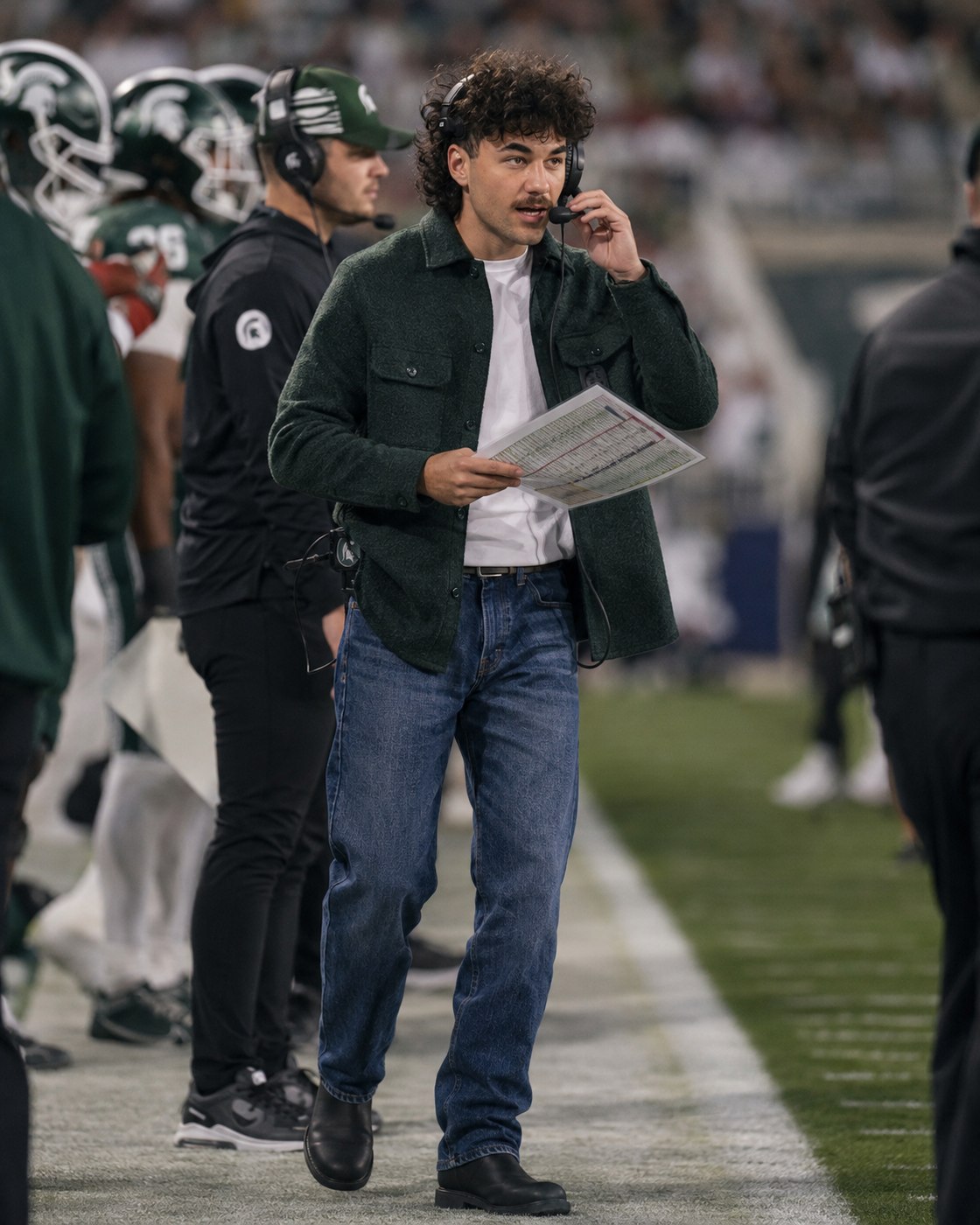
Grambling State’s first possession of Saturday afternoon ended with a dive to the fullback that went thirty yards for a touchdown, and the sound Spartan Stadium made in response was not a boo. Booing takes a decision. What came down out of the stands was lower and faster than that, a short flat exhale from a lot of people who had all arrived at the same thought at the same moment and did not want it.
It was 7-7 in the first quarter. Michigan State went three-and-out on the next possession, in its own territory, and then won the football game 56-7. Grambling did not record another first down for the rest of the afternoon. That is the whole story of the day, and the reason it deserves more than the write-off a 49-point win over an FCS opponent usually gets is that for about six minutes, in the first game of the Nick Mansour era, it looked exactly like the last four years.
Then it stopped looking like that, and it never looked like that again.
Michigan State finished with 618 yards, 9.4 yards a play, 31 first downs and one penalty. Cam Edwards ran 16 times for 147. Leo Hannan, a redshirt freshman making the first start of his life, completed 19 of 23 throws for 250 and two scores and did not turn the ball over. The defense recorded eighteen tackles for loss. Grambling gained 147 yards, converted one third down in ten tries and punted seven times.
Those numbers are the least interesting part of what happened, and everybody inside the program said so before I could.
One thing did go exactly as designed. On Thursday of last week I watched an athletic department employee with a stopwatch run the pregame script three times in an empty stadium, because the first two attempts came in eleven seconds long. On Saturday the whole sequence, buses to warmups to the band to the tunnel, came in on time. Nobody mentioned it. That is the correct response to a rehearsal working.
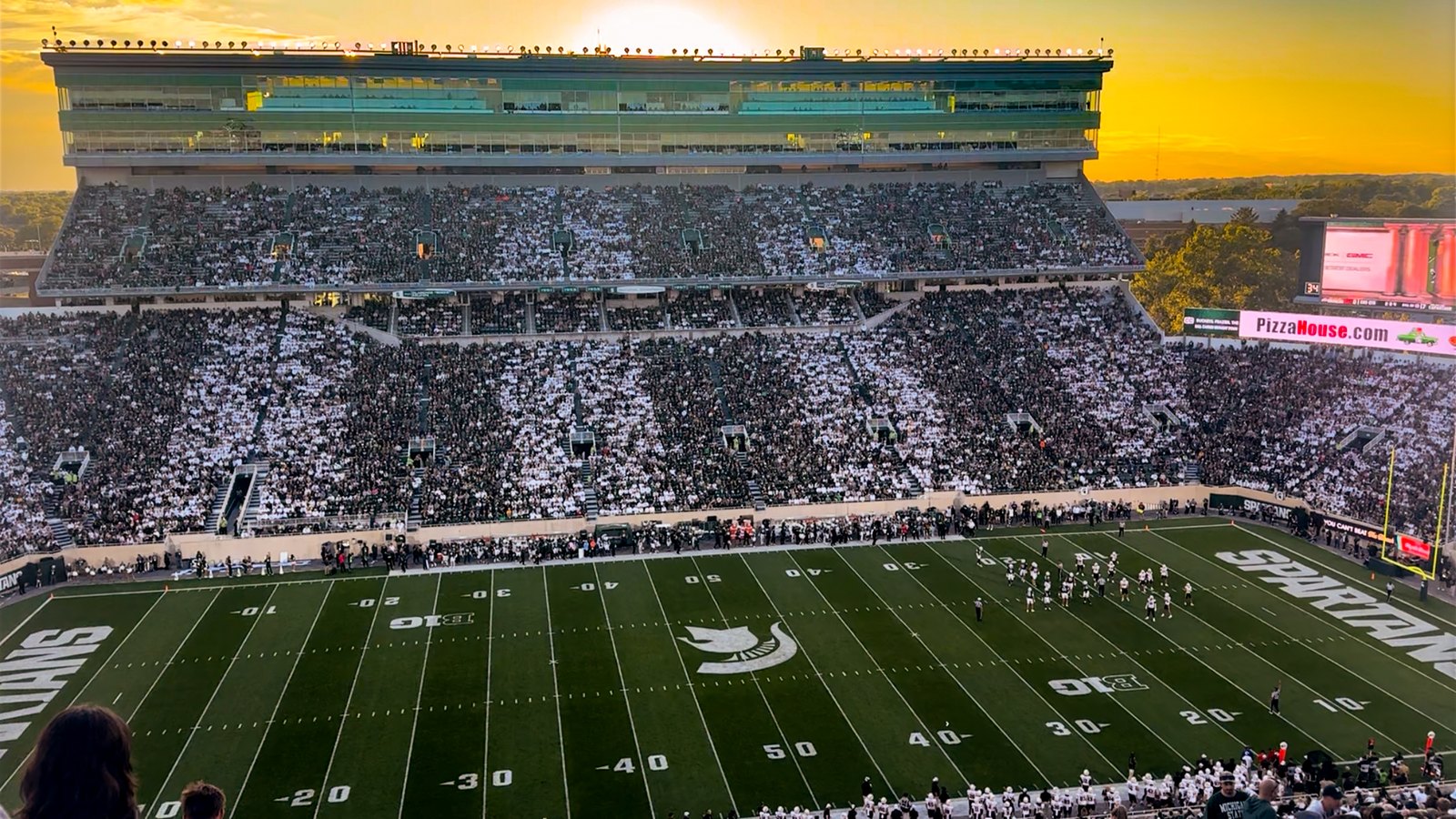
The opening of the game was the opposite of what anyone expected from a 28-year-old who had spent eight months being described as a systems guy. Michigan State came out throwing. Hannan’s second real throw of the day went 43 yards to Braylon Collier down the left side, placed away from a corner who was playing with a vertical cushion and never got his head around. On the next snap Edwards ran 17 yards for the touchdown, and eighty seconds into the season Michigan State led 7-0 and the stadium was making the noise it had come to make.
Then Grambling had the ball, and the thing that everyone in East Lansing had been quietly worried about all week arrived on schedule.
The Tigers run the option, they run a great deal of it, and they run it well enough that it has been giving bigger teams trouble for years. Michigan State handled the actual option fine. Three times in that drive the Tigers ran the play they wanted to run and got nothing for it. What beat them twice was the counter to it, the misdirection back to the fullback, and the second one went thirty yards to the end zone with nobody in front of it.
A defensive staffer, granted anonymity because he is not authorized to discuss game preparation, walked me through it Sunday afternoon and did not enjoy it.
“We were wrong for about six plays, and that’s the whole thing,” he said. “We had too many hats down on the ball, because that’s what you do against that offense, that’s what everybody does. And then the second level’s empty and they hit us in it. Twice. Same play. Joe saw it before I did. Honestly everybody in the box saw it, it wasn’t some genius thing anybody did. It’s the easiest correction we’re going to get all year and we should have had it on the first one instead of the second one.”
Cam Edwards was on the sideline for the whole of it and said afterward that the noise was the part he noticed, not the football.
“I heard it. Everybody heard it, it ain’t subtle in here,” Edwards said. “But nah, I wasn’t tripping. I been here for the years where you supposed to be tripping and this ain’t that. Them boys on defense be watching a whole lot of tape. Two series later they had it. So, no. I wasn’t worried about it.”
Michigan State got the ball back and threw it three times and punted. That was the part that made the stadium go quiet a second time, and it is also the part Mansour was most willing to talk about afterward, because it was his.
“That was me being greedy,” he said. “We hit the deep one, it worked, and I wanted another one, and it’s first drive and I’ve got a redshirt freshman and I put him in three straight dropbacks in our own end. That’s a bad sequence. I knew it walking off. We fixed it, but yeah, that one’s mine.”
Joe Rossi, the defensive coordinator, is not a man who dresses things up.
“They ran a good play and we were in a bad look for it,” Rossi said. “Then they ran it again and we were still in a bad look for it. So we got out of the look. That’s really all that was. I know that isn’t much of an answer.”
What Michigan State got out of the look and into is the notable thing about Saturday, and it took the people in the press box most of the second quarter to say it out loud.
Since December, every conversation about this staff’s defense has been a conversation about a 4-2-5. Light personnel. Speed over mass. Defensive backs who can do more than one job. It was described in the introductory press conference, diagrammed on message boards, mocked on the radio and defended in this space. Michigan State barely played it.
Against an option team, the Spartans lined up in a three-man front with four linebackers, in a conventional four-man front with three, and on a handful of short-yardage snaps in a five-man front with two. Personnel groupings changed by series and sometimes within one. The disguise was not exotic.
The first structural sign of it came on the second Grambling possession, when Michigan State put a body in the alley and left it there, which is to say it stopped sending everybody to the football and kept somebody home for the counter. Grambling ran the same misdirection twice more in the first half. It gained a total of one yard.
A Grambling assistant coach, who spoke on the condition of anonymity because he is not the person authorized to discuss game plans, was straightforward about the whole afternoon.
“First drive, we had them,” he said. “I’m not going to sit here and pretend we didn’t have them. We had the look we wanted, we hit it twice, one of them goes for six. Then they change the front and they leave a guy in the alley and we never got another one all day. Second quarter they were in something different damn near every snap. We had three plays in that game that beat what we saw on tape, and they didn’t run what was on tape.”
He also volunteered the other half of it before I asked for it.
“Look. We’ve got a scholarship number and they’ve got a Big Ten roster, and I’m not going to make it more complicated than it is. They should beat us like that. They were also coached well. Both of those are true and I don’t think either one is interesting.”
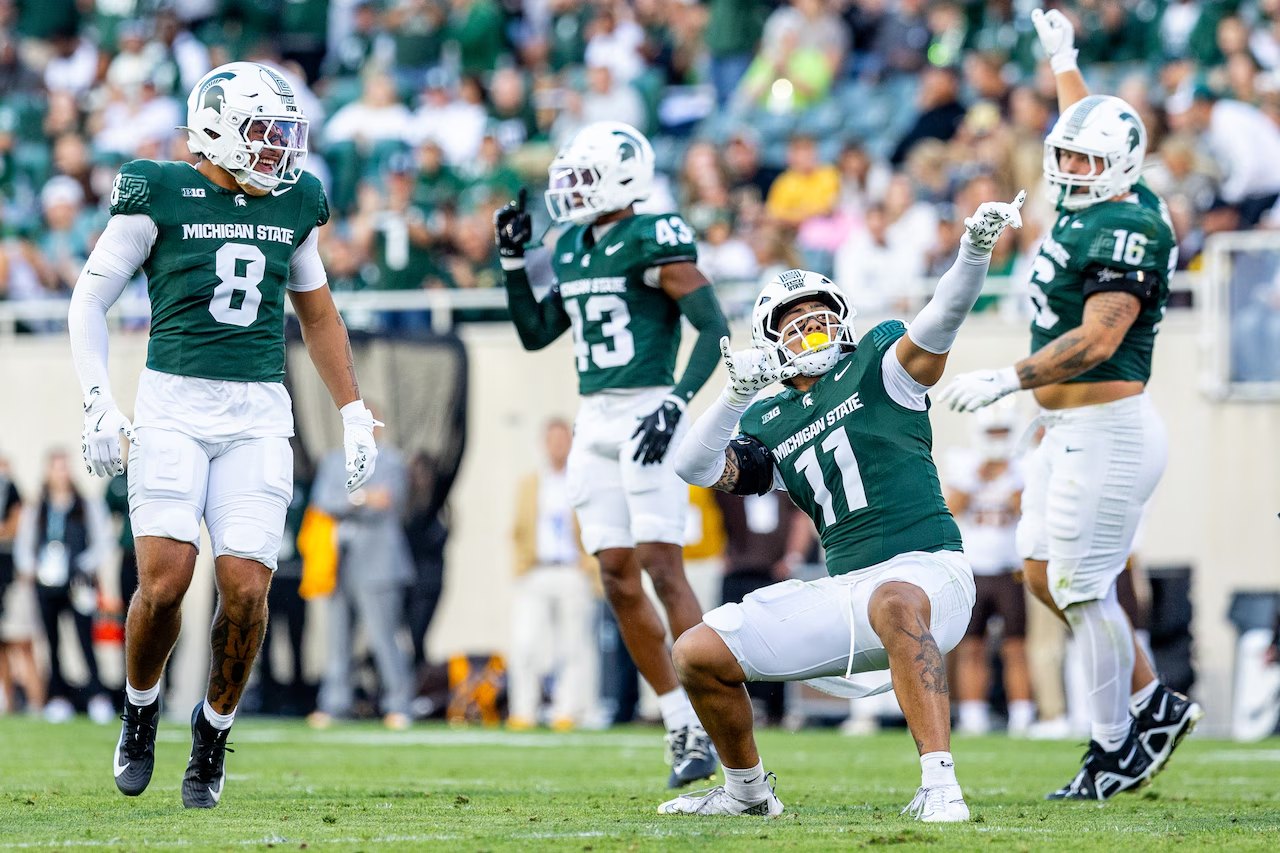
The eighteen tackles for loss are the number people will keep. Brady Pretzlaff had three. Jordan Hall had two to go with eight tackles. Nikai Martinez had nine tackles from strong safety. Andrew Brinson IV had a tackle for loss and two pass breakups.
Jordan Hall, who is the closest thing this defense has to a spokesman and does not especially want the job, put the first drive on himself before anybody suggested it.
“That was on us, me included,” Hall said. “I’m sitting downhill on the dive fake because that’s what I’d been coached to do all week and that’s what I should be doing, and then the ball’s just not there. Second time it happens I’m like, okay, so that’s twice, that’s not them getting lucky. And then we got it changed and it was over. Like, it was actually over. They’d go three plays and punt and we’d come off and nobody was saying much because there wasn’t anything to say.”
The most surprising name on the Michigan State defensive depth chart Saturday was Chris Piwowarczyk, who started at linebacker ahead of Cam Stodghill. Piwowarczyk is a walk-on. He is shorter and thicker and stronger than the player he replaced, which is precisely why he was in there, and he finished with four tackles and two tackles for loss in the first start of his career.
He found out on Wednesday.
“Coach Rossi told me in the hallway,” Piwowarczyk said. “It was maybe nine seconds. He said, you’re going to be up this week, we like you against this, get your stuff right. And then he walked off. I called my dad from the parking lot.”
Asked what it was about him that fit, he gave the least romantic answer available.
“They’re trying to wash me down inside, that’s the whole offense, they want to displace you and run behind it. I’m not real tall. So it’s easier for me to get underneath a guy than it is for most people. That’s pretty much the whole scouting report on me.” He thought about it. “It’s a strange thing to be excited about. Being short.”
He is 22. His head coach is 28. That gap is six years, which is smaller than the gap between Piwowarczyk and several of the graduate students on the other team’s roster this week, and it is the sort of arithmetic that has stopped being remarkable in this building and has not stopped being true.
With ten seconds left in the half and Michigan State ahead 21-7, the Spartans had fourth and goal at the two, having already failed on three straight runs from inside the four. One was an H-back dive. Two were quarterback sneaks. None of them involved handing the football to the best player on the field.
Mansour called a pass. Crishon McCray went up in the back of the end zone with a defender on him, came down with it, and hit the ground. The officials ruled the ball moved on contact with the grass. No catch.
What happened next was the loudest sustained thing in that stadium all day and it lasted about four minutes. People stood up. A section behind the Michigan State bench threw cups, and there was ice in a lot of them. The replay went up on the board twice and both times the noise got worse. Michigan State led by two touchdowns at the time and would eventually win by 49, and for the length of a television timeout none of that mattered to anybody in the building.
Edwards, asked whether he wanted the football on any of those four snaps, did not perform humility about it.
“I wanted it,” he said. “Course I wanted it. I want it every time, that ain’t news, that’s not a story. He came and found me on the sideline after and told me why. Didn’t have to do that. I still wanted it, though.”
Mansour, asked the same question about eight different ways over the course of a fifteen-minute availability, was pleasant about it every time and did not change his answer.
“Yeah, that’s fair,” he said. “I’ve heard that one a lot since about four o’clock. We ran it three times and got moved backwards on two of them, and I didn’t like the look, and I thought we had a free one on the edge. Crishon caught it. I thought he caught it. They looked at it a long time and said the ball moved when he hit the ground.” He shrugged. “I don’t have anything smart to say about that one. It didn’t decide anything.”
It did not decide anything. It is in here because for four minutes in the second quarter of a blowout, Spartan Stadium was as angry and as unified as it has been in several years about something that had no consequences whatsoever. By the third quarter nobody was talking about it.
Here is the counterweight, and it needs to be said plainly and then said again.
Michigan State beat an FCS program by 49 points at home. Six hundred and eighteen yards against Grambling State proves that you can gain 618 yards against Grambling State. Every one of the encouraging numbers from Saturday is attached to an opponent that is not in the same resource category, does not have the same roster size, and did not have a chance in the game after the first quarter.
Mansour raised this himself, unprompted, roughly ninety seconds into his postgame availability, and he was the least relaxed I have seen him about anything.
“I want to be careful with how I say this, because I’m not running our guys down,” he said. “They played a clean game. I’m happy for them, they earned a good weekend. But nobody in there is confused about what happened today. We beat Grambling State. That’s a real football program with real players and they’ll go win games in their league, and we are supposed to do that to them, and we did. It doesn’t tell you what we are. What it tells you is that we’re not broken, and I’ll take that, because we needed to know that. That’s the size of it. That’s honestly the size of it.”
Terry Loveless spent nine years as a personnel director in this conference and now consults for two teams that are not in it. Three different people sent him Michigan State’s box score Saturday night.
“Every one of them wanted me to say something about the yardage,” Loveless said. “There’s nothing to say about the yardage. You’re supposed to do that. Everybody does that to that opponent, and if you don’t, that’s the story instead.”
What he would look at, he said, is duller.
“One penalty. Zero sacks allowed. The other team punted seven times. Third down at 70 percent. Those are the things you can actually learn something from in a game like that, because they’re about whether the machinery works, and the machinery is what’s been broken in that place. The yardage can’t teach you anything, it’s the wrong opponent for that. The other stuff you can take with you.”
An NFL area scout who covers the region was at the game for two specific players and gave me a version of the same thing with less patience.
“You can’t learn anything good about a guy in that game,” he said. “You can learn something bad. If a guy gets moved around out there, that goes in the file and it stays in the file.”
He had two names in the file.
Derrick Simmons is a sophomore defensive tackle who was an edge rusher last year and is still built like one. On Grambling’s opening drive he got displaced off the football repeatedly, and he was a significant reason the two misdirection runs had as much room as they did. It is a specific, correctable, physical problem, and it gets much worse against a Big Ten interior line in October.
Charles Brantley had a strange day. Grambling completed two passes in the entire game. Both were on third down, both mattered, and on both of them a receiver simply put a body on Brantley and went and got the ball. Grambling did not throw at him again after the first quarter, which mostly reflects the fact that Grambling stopped being able to throw at anybody. Brantley is a veteran and has been better than that for years. Two contested balls lost to an FCS receiver on one afternoon is either nothing at all or the first line in a file, and there is no way to know which one until somebody with better receivers tries it.
Luka Vincic gave up several pressures at right guard. He was not overrun and there was no disaster. It was the least clean of the five offensive line performances, and the offensive line was otherwise the quiet success of the day.
Ben Murawski was excellent in both phases at left tackle, sealed edges on Edwards’s two longest runs, and got out to the second level more than once. Nick Sharpe mauled people at left guard and allowed one pressure all afternoon. Conner Moore was steady at right tackle.
And Rustin Young played center, which was the loudest argument of the preseason and turned into one of the quietest facts of the game. Young is a 6-foot-7 tackle who has been moved inside to a position where nearly everyone is shorter, and against Grambling’s front he was up and down early in the run game and mostly up after that. He got beat a couple of times on reach blocks in the first quarter. He was very good getting off blocks into space. There was no snap that went sideways, no penalty, no visible confusion on a line call.
Asked about it, Young gave the answer he gives.
“It was fine,” he said. Asked to expand: “I snapped it and they got it. Second half was better than the first half. Got beat on a couple of reaches early and then I stopped getting beat. I don’t really have more than that.”
It settles nothing. A Grambling nose tackle is not the test the argument was about. An entire game did go by without the thing everyone was afraid of happening even once.
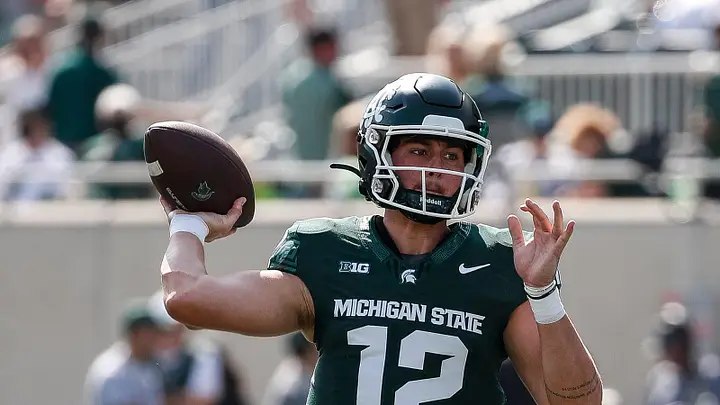
Hannan was better than he needed to be. Nineteen of 23 is 82 percent, and the percentage is less impressive than what it was built out of, which was almost no wasted snaps. He threw the deep ball well once and did not force a second one. He took what the coverage gave him for most of three quarters. Six times he pulled it down and ran, and four of those were first downs. He was not sacked. He did not put the ball in danger.
He also does not say anything, which is normal for a redshirt freshman who has been coached on how to handle this and has not gotten good at it yet.
“We just executed,” he said, four different times, about four different things. “Coach put us in good spots all day. The line was unbelievable. I didn’t do anything special.”
Once, though, it slipped.
Asked what he thought when Grambling scored, Hannan started to answer the way he had been answering, and then did not.
“Honestly? When they scored I thought, oh no, here we go. That was my actual thought. Which is a dumb thing to think in the first quarter of a game that’s tied, but I’ve been here two years and that’s what I thought.” He stopped, and you could watch him find the rail again. “But we responded, and that’s a credit to the older guys.”
Alessio Milivojevic played the fourth quarter against Grambling’s backups and went 4 of 5 for 100 yards and two touchdowns, one of them a five-yard drag to Rowan Merlino that Merlino took 54 yards to the end zone with nobody within ten yards of him, the other an 18-yard throw to Eddie Whiting.
The numbers came against backups in a 42-point game. What was worth reporting is that the entire Michigan State sideline came apart for him. The starters were on the fence. Edwards was halfway down the numbers. When Milivojevic came off after the Whiting throw the line to get to him was three deep.
Milivojevic lost the starting job in August. He said one thing about the afternoon that was worth writing down and it was not about that.
“I didn’t know I was going in until Coach Sheridan told me to get loose,” he said. “Then I was just trying not to screw it up. That’s honestly it. That’s the whole thought process.”
Michigan State’s receivers were the one group on this roster that nobody spent August arguing about, which is partly because there are five of them who can play and partly because nobody had a reason to think about them at all. They caught everything. Hannan’s four incompletions include one drop.
KK Smith had seven catches for 105 yards and also ran the ball for 30 more on jet action, and he is the closest thing Saturday produced to a new fact about the offense. He is not the name that got talked about in camp. He was the best receiver on the field for three quarters and he was open constantly.
He also had the drop, and he brought it up before anyone asked.
“I dropped one,” Smith said. “Everybody saw me drop one. My phone saw me drop one, I’ve got about forty texts about it. Ball was right there. I don’t have a reason.” Asked about the possibility that he is this team’s number one receiver, he was uninterested. “Man, somebody said that to me walking in the tunnel and I said, we played Grambling. Ask me that in October. I’m serious, ask me then.”
Crishon McCray caught five for 45 with two touchdowns and returned five punts for 78 yards, which meant he touched the ball ten times and was the most consistently productive player on the field who was not Cam Edwards. He is also the man who caught the football on fourth and goal, or did not, depending on which official you ask.
He has no interest in relitigating it and would not be talked into a soundbite about it.
“I caught it,” McCray said, and then waited a beat. “They went and looked. I’m not going to sit here and argue with a TV. But I caught it.”
On the punt returns, which were the best of the day by a distance, he was less generous with himself.
“Blocking was good. That’s all punt return is. If the front’s good it looks like I did something out there.”
Braylon Collier had four catches for 66, including the 43-yarder that opened the season, and he is the most careful talker in the group. He described the throw before he described the catch.
“That was a good ball,” Collier said. “He put it out where the corner couldn’t get to it. Coach has been on that all camp, throw it to where only your guy can go get it, and Leo did it on the first one of the year, first real one. I ran a straight line and it was there. I don’t want credit for that one.”
Brennan Paracheck caught four for 56 with 40 of it after the catch, which is the tight-end version of a good afternoon. Rowan Merlino’s only catch went for 54 and a touchdown. Fredrick Moore did not have a target that mattered. Brandon Tullis ran five times for 32 and scored twice, both from close, both on the play the head coach declined to call on fourth and goal in the second quarter.
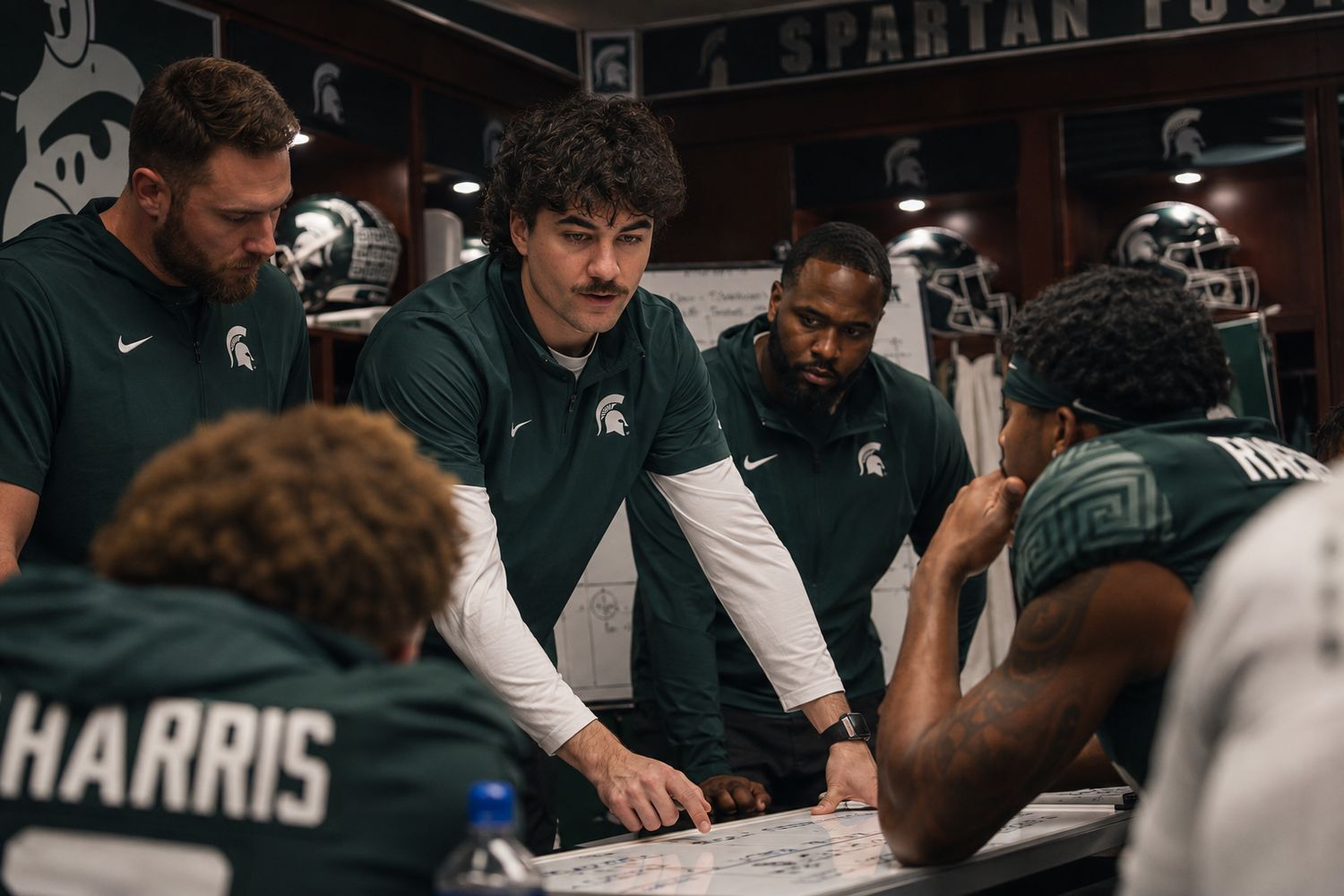
Mansour calls the offense and the defense. It is the single most-questioned structural decision of the hire, more than the age, and the specific objection has always been about time rather than competence: every game contains a moment where the offense comes off needing a quarterback conversation while the defense goes back on needing a front adjustment, and those are the same twenty seconds.
The arrangement on paper is that Nick Sheridan owns the quarterback and Rossi owns the front, and that the head coach goes wherever the emergency is. Saturday was the first time it was ever run live.
“It happened twice, and both times it was fine,” a staffer said. “Second quarter, Leo comes off after a third down he didn’t like and the defense is going back out and Joe wants to change the front, and those are the same twenty seconds like everybody told us they would be. Nick went to the defense. Sheridan had the quarterback. It was completely boring.” He stopped there and then did not leave it. “I told people all camp it was going to be a mess the first time. It wasn’t a mess. I don’t know yet if that’s because it works or because it was Grambling and nothing was on fire. Ask me at Notre Dame.”
Sheridan, the offensive coordinator, has been having versions of the same sideline conversation with quarterbacks for two decades and described his part of it as small.
“It’s, what did you see. Then here’s what I saw. Then here are the next four calls so you know where we’re going, so you’re not surprised,” Sheridan said. “Ninety seconds, tops. That conversation hasn’t changed in twenty years. The only thing that’s different here is that the guy who wrote the four calls isn’t standing there while I say them, which honestly makes it easier, because he’s not hearing me simplify him.”
Michigan State was not flagged for a procedural penalty. It did not burn a timeout for personnel. Its only penalty of the afternoon was a hold. It punted one time, for 52 yards, and Liam Boyd made all eight extra points and never attempted a field goal because the offense never stopped short.
None of that is an achievement. It is a list of things that did not go wrong, and this program has spent four years generating that exact list in the other direction, which is why several people in the building brought it up before I did and one of them brought up the timeout thing twice.
Pete Hannan drove over from the west side of the state Saturday morning and got to his seats about forty minutes before kickoff, which he said was about half an hour later than he wanted to.
“I watched maybe four plays of that first drive standing up and my wife told me to sit down,” he said. “She was right. I was the only one standing.”
He has watched his son play football since he was nine. He said the strange part is that he has been more nervous than this, several times, at much smaller games.
“I don’t know how to explain that and I know it doesn’t make sense,” he said. “High school playoffs, I was a wreck. Every single time. Saturday I was fine after about ten minutes and I couldn’t tell you why.”
He can, actually, name the play.
“Second quarter, third down, they got some pressure and he moved up in the pocket about two steps and threw it to the tight end. Paracheck. It was nothing, it was like fourteen yards. And I didn’t think about it. I watched it and I didn’t think anything at all.” He laughed a little. “That’s when I knew I was okay. When I stopped thinking about every throw.”
Asked what he made of the coach, a 28-year-old who has never played the sport and to whom he has handed his son’s development, Pete Hannan gave an answer that a lot of parents give and very few of them mean.
“He calls. That’s all I’ve got. He calls when there’s nothing to call about. In January he called me about a shoulder thing that turned out to be nothing and he already knew it was nothing before he called. My wife thinks he’s wonderful. I’ve been around enough of them to wait a while before I say that.” Pause. “He’s been good to Leo. That part I’ll say.”
On Saturday night, while Michigan State’s staff was doing the thing staffs do after home openers, which is eat bad food in a room with the game on a screen nobody is watching, Notre Dame lost 38-10 to an unranked Wisconsin team.
It was the second consecutive blowout for the Irish, who had lost 42-6 to Miami the week before. On Sunday they fell out of the Top 25 entirely. Michigan State plays at Notre Dame in two weeks.
That game has been the measuring stick on this schedule since the day it came out. Everyone treated it as the honest test, the one that would tell you whether any of this was real, and nobody at Michigan State ever pretended otherwise. It was supposed to be a top-five program in its own stadium against a first-year staff.
It is now a program in visible free fall, and Michigan State is going to walk into it as a team a lot of people will expect to win.
A Michigan State staffer described Sunday morning in the building as strange, and I asked him to be more specific about the word.
“Everybody’s got the same clip on their phone in the same room and nobody’s saying anything about it,” he said. “What are you going to say? Great? It’s not great, that’s a weird thing to be happy about. And it changes what that game is and I don’t think any of us know what it changes it into yet. I’ve been on a lot of staffs where we were the team everybody expected to lose, and I know how to do that week. I don’t really know how to do this one.”
That is the real second story of Michigan State’s Week 1, and it happened four hundred miles away. Nobody in this program in this decade has been the favorite in a road game that mattered. Nobody on this roster has any experience being the team that is supposed to win one.
Mansour was asked about Notre Dame twice on Sunday and was not interested either time, in a way that came off as uninterested rather than deflecting.
“I watched some of it,” he said. “Not for us. It was Notre Dame and Wisconsin and it was on. We play Eastern Michigan Saturday. I’m not being cute with you, I haven’t spent more than a couple of minutes on the other thing and I’m not going to this week.”
Eastern Michigan is 1-1. The Eagles beat Sacramento State and lost to San Jose State, and they come up US-23 on Saturday for a noon kickoff.
Chris Creighton has been their head coach for more than a decade. Before he got there the program was a national punchline, a name that showed up in columns about whether certain schools should play football at all. He took them to bowl games. He is one of the more respected coaches in the country among people who actually do the job, and he is the least novel thing about Saturday’s matchup.
The reason people in Michigan will pay attention to this game has nothing to do with either coach.
Eastern Michigan’s quarterback is Noah Kim, who started at quarterback for Michigan State in 2023.
Kim was QB1 here during the Mel Tucker collapse, which is to say he was the starting quarterback of a program in the middle of the worst institutional disaster in its modern history, at 20 years old, and none of it was his to fix. He left. He went to Coastal Carolina. He ended up at Eastern Michigan, got an NCAA waiver for a seventh year, and on Saturday he will jog out of the visitors’ tunnel at Spartan Stadium.
He is 24 or so and he has kept playing football, and that is the whole of it. He is not a villain, he did not leave under a cloud of his own making, and he does not need to be a sad story either. He is a seventh-year quarterback who has seen every coverage that exists.
The strangest part of it is a matter of institutional memory. Nobody currently employed by Michigan State football was here in 2023. Not the head coach, not a coordinator, not a position coach. The quarterback lining up against them on Saturday knows more about the last functioning version of this program than anyone in the building does.
“I’ve never met him,” Mansour said. “Somebody told me on Sunday and I said okay, and then I went and looked it up, which probably tells you how much of that is in this building right now. Which isn’t a shot at anybody. It’s just, we all got here in December.” He went back to the football, where he is more comfortable. “He’s a seventh-year quarterback. He’s seen everything twice, so you’re not going to trick him, and I don’t think we should try. We’ll just play.”
There is a version of this week that gets ugly, and there is a version where a stadium is decent to a kid who took a beating here for reasons that had nothing to do with him. The fan base will decide which one it is.
Week 1 was about whether Michigan State was still broken. Enough of that got answered to move on from it. What replaces it is not the same feeling.
Eastern Michigan is the second consecutive opponent nobody respects, and Notre Dame is the week after. Every part of that arrangement is designed to produce a bad Saturday somewhere in it, and the fan base knows it, because Michigan fans spent Saturday afternoon watching Western Michigan hang around until the very end of a 17-9 game an hour down the road.
MAC teams beat Big Ten teams. It happens most years, usually to somebody who spent the week being asked about a game two weeks out.
Michigan State has, by any reasonable measure, nothing to complain about. It scored 56 points, allowed one drive, committed one penalty and lost nobody to injury. Its quarterback was efficient, its best player looked like its best player, its offensive line held up, and a walk-on linebacker had two tackles for loss in his first start.
None of that is evidence about anything except itself. The staffer who described Sunday morning as strange said the last useful thing anybody said to me all weekend, and it was not about Notre Dame.
“The scary thing about winning like that is you don’t learn where you are,” he said. “You come in Sunday and there’s no film of you being tested, so you correct six plays and then you’re just guessing again. I’d rather have the 49 than the alternative, obviously, I’m not an idiot. But I don’t know one thing more about this team today than I did Friday. Six plays. That’s all I learned. Six plays and they were all in the first quarter.”
Michigan State hosts Eastern Michigan at noon Saturday.